
We welcome the mysterious nature of faith into the room

While old school psychotherapy kept faith out of the counseling room, I’m a firm believer in the transformative power of Spirit. Whatever that means to you, we welcome your beliefs, and through openness and a willingness to allow it to guide us, we will use it to tap into greater wisdom and resilience.
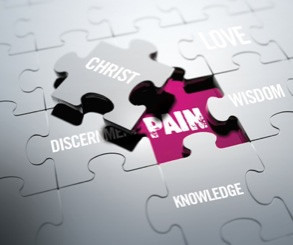
As a spiritual person myself, I’ve witnessed healings that have humbled me. There is an undeniable element to transformation that moves beyond simple tools and techniques. We honor this powerful presence and allow it to promote your highest ultimate spiritual unfolding.
While I myself am Christian, I honor all faiths and believe that an infinite God would naturally be expressed in infinite ways. We welcome you to lean on the comfort and wisdom of your own spiritual practice as you find your way through growth and healing.
One of my favorite quotes is “God comes through the wound” – so perhaps there is a greater purpose to our pain.
Healing Grief with IADC Therapy

I am a certified IADC Therapist, currently exploring this remarkable therapy for grief and loss. IADC Therapy can rapidly and effectively reduce the sadness associated with grief. We provide Induced After Death Communication (IADC) Therapy both in-person or online — a groundbreaking approach that research show can provide significant relief in only two 90-minute sessions.
Developed by clinical psychologist Dr Allan Botkin, IADC Therapy is derived from EMDR Therapy but with distinct changes to the standard EMDR protocol. It is designed to specifically target sadness, with many clients reporting the perception of a sense of reconnection with the deceased, which can include visual, auditory, or tactile sensations—an after-death communication (ADC).
What is an ADC?

ADCs are a common, naturally occurring phenomenon that can provide healing and assist in the resolution of unresolved issues relating to a death. Regardless of whether a client experiences an ADC, the primary aim of the therapy is to reduce sadness.
After-death communication (ADC) is a very common and natural phenomenon by which a person perceives the presence of a deceased loved one in some way. It is estimated that approximately one-third of people report having experience an ADC at some point in their lives (Streit-Horn, 2011). They are most commonly experienced during sleep but can also be experienced during full waking consciousness. They are usually reported to be helpful and beneficial to the experiencer.
IADC Therapy is known to induce ADCs in approximately 70% of clients. Although experiencing an ADC can be very healing, it is not the primary objective of the therapy. The primary objective is to reduce sadness.
How will I know that my IADC Therapy has worked?
As with all psychological interventions, we cannot guarantee the outcome of IADC Therapy. However clinical, anecdotal, and research evidence suggests you may experience one or more of the following:

· Your overall daily sadness will be lessened.
· You will more frequently recall ‘happy’ memories and the associated positive emotion.
· You will be able to recall memories that previously would have elicited distress, but with less distress or possibly even with good feelings of affectionate nostalgia, peace, and love.
· Your sense of ‘connection’ with the deceased will be less associated with deep sadness, and more often associated with a sense of peace, calm, and love.
· You may experience insights about the deceased, your relationship, and how to find meaning in the loss.
· You may experience an ADC – a perceived sense of the presence of the deceased, or a feeling of reconnection – in the form of intense love, or visual, auditory, or kinesthetic phenomena.
To book in for your online grief therapy with an IADC therapist, you must first complete the pre-screening questionnaire and undergo a free 25-minute screening (in-person or Telehealth). We only take on clients for whom this therapy is a good fit and are therefore very likely to have a good outcome.
 Marci Wise, M.A., LMHC